
Enjoy Free Shipping over $150, 30-Day Free Returns, and a Full Refund Guarantee. Join the Club now

Leadership Lessons from American History of Presidential Power

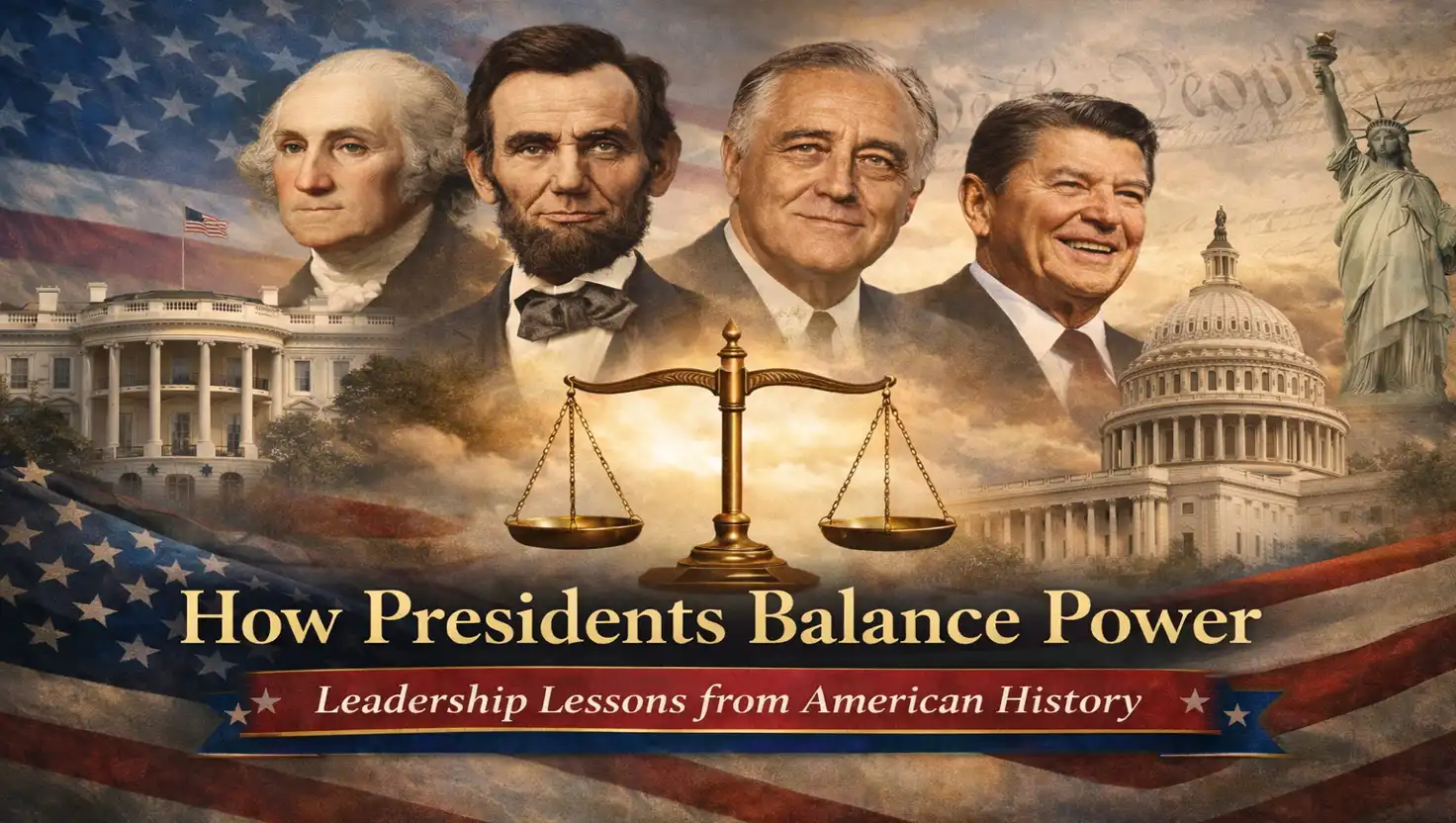
Presidential Power Explained: Leadership Lessons from American History

The U.S. presidency is one of the most powerful positions in the world. However, this power is intentionally limited by a system of checks and balances designed to prevent any single branch of government from becoming too dominant. Understanding how presidents have navigated these constraints offers valuable leadership lessons that remain relevant for leaders in any field today.


Understanding Presidential Power and Leadership Lessons

The role of the president requires careful leadership in balancing authority within the executive branch and in relation to Congress and the judiciary. The framers of the Constitution designed this balance to protect democracy while still allowing decisive leadership. These foundational principles provide essential leadership lessons about restraint, cooperation, and accountability.


Leadership Lessons from the Limits of Executive Power

Constitutional Constraints and Leadership Lessons

Although the president holds significant authority in areas such as foreign policy and national defense, executive power is limited by the Constitution. Congress holds the power to create laws, while the judiciary interprets them. Successful leadership requires respecting these boundaries rather than attempting to dominate other branches of government.

Leadership Lessons from George Washington’s Presidency

George Washington set a powerful leadership example by understanding the importance of restraint. By stepping down voluntarily after two terms, he reinforced the principle that leadership should serve the nation rather than personal ambition. This remains one of the most enduring leadership lessons in American history.


Leadership Lessons from Cooperation with Congress

Strategic Cooperation as a Leadership Lesson

While presidents have the power to veto legislation, meaningful governance depends on cooperation and compromise. Effective leaders understand that persuasion and negotiation are often more powerful than confrontation when working with legislative bodies.

Leadership Lessons from Franklin D. Roosevelt’s New Deal

Franklin D. Roosevelt demonstrated strong leadership during the Great Depression by building alliances within Congress to pass the New Deal. Despite resistance to some of his proposals, Roosevelt’s ability to communicate a clear vision and negotiate support offers lasting leadership lessons in coalition-building.

Leadership Lessons from Lyndon B. Johnson’s Great Society

Lyndon B. Johnson used his deep understanding of Congress to advance the Great Society programs. His leadership helped expand civil rights and social welfare, illustrating how strong relationships and legislative strategy can turn ambitious ideas into lasting policy.


Leadership Lessons from Crisis and Emergency Powers

Crisis Leadership Lessons in Times of War and National Emergency

Periods of crisis often lead to an expansion of presidential authority. Strong leadership during these moments requires balancing swift decision-making with long-term respect for constitutional principles.

Leadership Lessons from Abraham Lincoln’s Civil War Leadership

Leadership Lessons from the Suspension of Habeas Corpus

During the Civil War, Abraham Lincoln suspended habeas corpus to preserve national security. This decision highlights leadership lessons about taking difficult actions while recognizing their extraordinary nature.

Leadership Lessons from the Emancipation Proclamation

Lincoln’s issuance of the Emancipation Proclamation demonstrated how leadership during crisis can align moral purpose with political strategy, reshaping the nation while preserving constitutional integrity.


Leadership Lessons from the Abuse of Presidential Power

Leadership Lessons on Ethics and Accountability

When leaders exceed their authority, trust in institutions is weakened. History shows that accountability and transparency are essential leadership lessons for maintaining public confidence.

Leadership Lessons from Richard Nixon and the Watergate Scandal

Leadership Lessons from Executive Overreach

Richard Nixon’s involvement in the Watergate scandal revealed the dangers of unchecked power. Attempts to conceal wrongdoing ultimately undermined his presidency and public trust.

Leadership Lessons from Post-Watergate Reforms

The reforms that followed Watergate, including new oversight laws, reinforced leadership lessons about the necessity of ethical governance and institutional safeguards.


Leadership Lessons from the Judicial Check on Presidential Authority

Leadership Lessons on the Rule of Law

The judicial branch plays a vital role in maintaining the balance of power. Courts ensure that leadership remains subject to legal limits, regardless of rank or authority.

Leadership Lessons from Supreme Court Oversight

Leadership Lessons from United States v. Nixon (1974)

The Supreme Court’s decision requiring Nixon to release the Watergate tapes reinforced a critical leadership lesson: no leader is above the law. Judicial oversight remains a cornerstone of democratic leadership.


Enduring Leadership Lessons from American Presidential History

The history of the American presidency reveals powerful leadership lessons centered on humility, cooperation, and restraint. Presidents must balance authority not only across branches of government but also with public expectations and global challenges. By learning from past successes and failures, current and future leaders can better manage power in a way that strengthens democratic institutions and serves the public good.

How Presidents Balance Power Leadership Lessons from American History

Leadership Lessons from American History: How Presidents Balance Power

The U.S. presidency is one of the most powerful positions in the world. However, the office is framed by a complex system of checks and balances designed to prevent any single branch of government from gaining excessive control. The role of the president requires deft leadership in balancing power—both within the executive branch and in relation to the legislative and judicial branches. Examining how past presidents have navigated these tensions offers valuable leadership lessons that remain relevant today.


Understanding Presidential Power and Leadership Lessons

The balance between executive, legislative, and judicial authority was a central concern for the framers of the Constitution. Their goal was to create a system that allowed strong leadership without enabling tyranny. Modern presidential leadership continues to be shaped by this foundational structure, offering enduring leadership lessons about restraint and responsibility.


Leadership Lessons from the Limits of Presidential Power

Constitutional Checks and Balances on Executive Authority

One key aspect of presidential leadership is understanding the limits of executive power. While the president holds significant authority in areas such as foreign policy and national defense, the Constitution grants Congress the power to pass laws and the judiciary the authority to interpret them. Effective leadership requires respecting these boundaries rather than attempting to dominate other branches of government.

Leadership Lessons from George Washington

Setting a Precedent for Limited Power

George Washington recognized that his role was not to rule over the other branches but to work in cooperation with them. By stepping down voluntarily after two terms, he reinforced the principle that presidential power should be limited and transferred peacefully, setting a powerful leadership example for future presidents.


Leadership Lessons from Working Together with Congress

Strategic Cooperation as a Leadership Skill

Although presidents possess veto power, governing effectively requires cooperation, negotiation, and compromise. Successful leadership often depends on the ability to persuade lawmakers and build alliances rather than relying solely on executive authority.

Leadership Lessons from Franklin D. Roosevelt

Building Legislative Support for the New Deal

Franklin D. Roosevelt demonstrated how presidents can shape legislative agendas through persuasion and coalition-building. His New Deal programs addressed the Great Depression by forging strong partnerships with Congress, even when his proposals faced resistance.

Leadership Lessons from Lyndon B. Johnson

Advancing the Great Society Through Congressional Leadership

Lyndon B. Johnson used his deep understanding of Congress to pass sweeping civil rights and social welfare legislation. His Great Society initiatives illustrate how effective leadership within the legislative process can produce lasting social change.


Leadership Lessons from Handling Crises and Emergencies

Presidential Authority During National Crises

In times of war or national emergency, presidents often assume greater control over decision-making. These moments test a leader’s ability to act decisively while maintaining respect for constitutional principles.

Leadership Lessons from Abraham Lincoln

Balancing Wartime Powers with Constitutional Restraint

During the Civil War, Abraham Lincoln exercised extraordinary authority by suspending habeas corpus and issuing the Emancipation Proclamation. However, he also recognized that such powers should be temporary and carefully justified, earning respect for his balanced leadership.


Leadership Lessons from the Abuse of Presidential Power

The Risks of Executive Overreach

History shows that when presidents exceed their constitutional authority, conflicts arise that threaten democratic stability. Ethical leadership requires transparency, accountability, and respect for institutional limits.

Leadership Lessons from Richard Nixon

Watergate and the Importance of Accountability

Richard Nixon’s involvement in the Watergate scandal highlighted the dangers of unchecked executive power. His attempts to conceal wrongdoing led to his resignation and prompted reforms such as the War Powers Resolution and the Ethics in Government Act to restore balance.


Leadership Lessons from the Supreme Court’s Role

Judicial Oversight as a Democratic Safeguard

The judicial branch plays a vital role in maintaining the balance of power by reviewing executive actions and ensuring compliance with the Constitution.

Leadership Lessons from United States v. Nixon (1974)

Upholding the Rule of Law Above Presidential Authority

In United States v. Nixon, the Supreme Court ordered the president to release the Watergate tapes, reinforcing a fundamental leadership lesson: no individual, regardless of office, is above the law.


Conclusion: Modern Leadership Lessons from Past Presidents

Balancing Power, Responsibility, and Democratic Values

Modern presidents must continuously navigate the balance of power amid public expectations and global challenges. American history emphasizes leadership lessons cantered on humility, cooperation, and restraint. By learning from past presidencies, current and future leaders can manage power responsibly while preserving the democratic principles on which the nation was founded.


JOIN THE LEGACY
Be the first to discover new collections, exclusive offers, and inspiring stories from American history.